
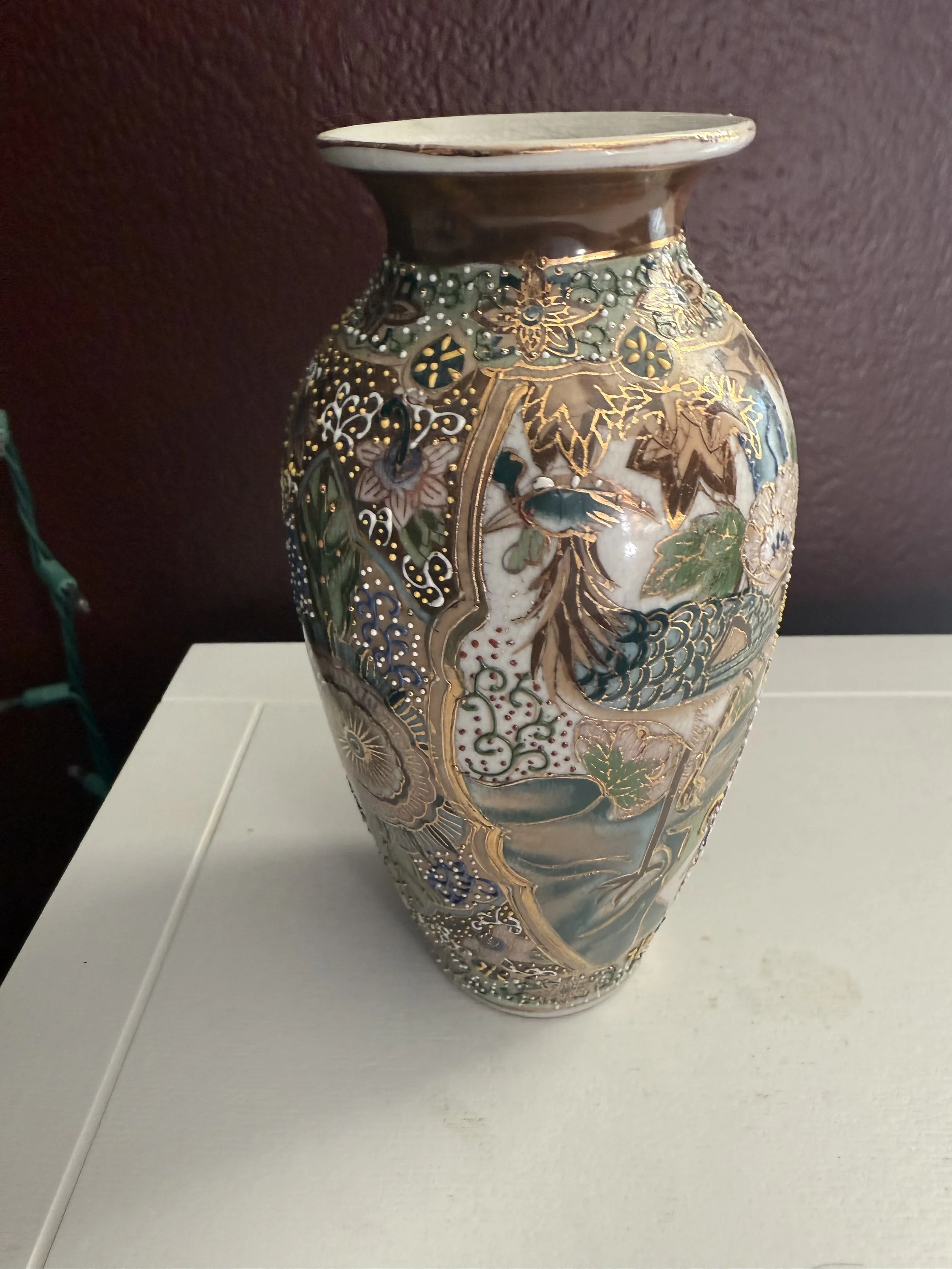
Japanese Satsuma Vase by Kinkozan

$2,100.00

A Masterpiece of the Meiji Era: Japanese Satsuma Vase by Kinkozan

Title Idea: Exceptional 19th Century Kinkozan Satsuma Vase – Hand-Painted "Peacock & Garden" Narratives

The Provenance & Pedigree

This exquisite vessel originates from the renowned Kinkozan Sobei workshop in Kyoto, the most prestigious producer of Satsuma ware for the Western Imperial markets during the Meiji Period (1868–1912). Pieces bearing the Kinkozan seal are held in the permanent collections of the Metropolitan Museum of Art and the Victoria & Albert Museum, representing the pinnacle of Japanese ceramic artistry.

A Masterpiece of the Meiji Era: Japanese Satsuma Vase by Kinkozan

Title Idea: Exceptional 19th Century Kinkozan Satsuma Vase – Hand-Painted "Peacock & Garden" Narratives

The Provenance & Pedigree

This exquisite vessel originates from the renowned Kinkozan Sobei workshop in Kyoto, the most prestigious producer of Satsuma ware for the Western Imperial markets during the Meiji Period (1868–1912). Pieces bearing the Kinkozan seal are held in the permanent collections of the Metropolitan Museum of Art and the Victoria & Albert Museum, representing the pinnacle of Japanese ceramic artistry.

characteristic microscopic "fish-roe" crackle glaze that defines authentic Kyoto Satsuma.

  • The Narrative Reserves: The vase is adorned with two primary hand-painted panels. The central motif features a Regal Peacock perched amidst a flowering garden of peonies and cherry blossoms. Every feather is rendered with breathtaking precision using Moriage (raised enamel), giving the bird a three-dimensional, lifelike presence.

  • The "Kinran-de" Borders: The panels are framed by intricate "brocade" patterns and heavy gold gilding. The use of deep cobalt blue enamels—a hallmark of high-end Kinkozan work—provides a stunning contrast to the burnished gold leaf.

Technical Details

  • Era: Meiji Period (Late 19th Century)

  • Markings: Authenticated with the impressed or gilded Kinkozan-zo signature on the base.

  • Condition: Exceptional antique condition. The gilding remains bright and the enamel "jeweling" is remarkably intact, preserving the original splendor of the piece.